

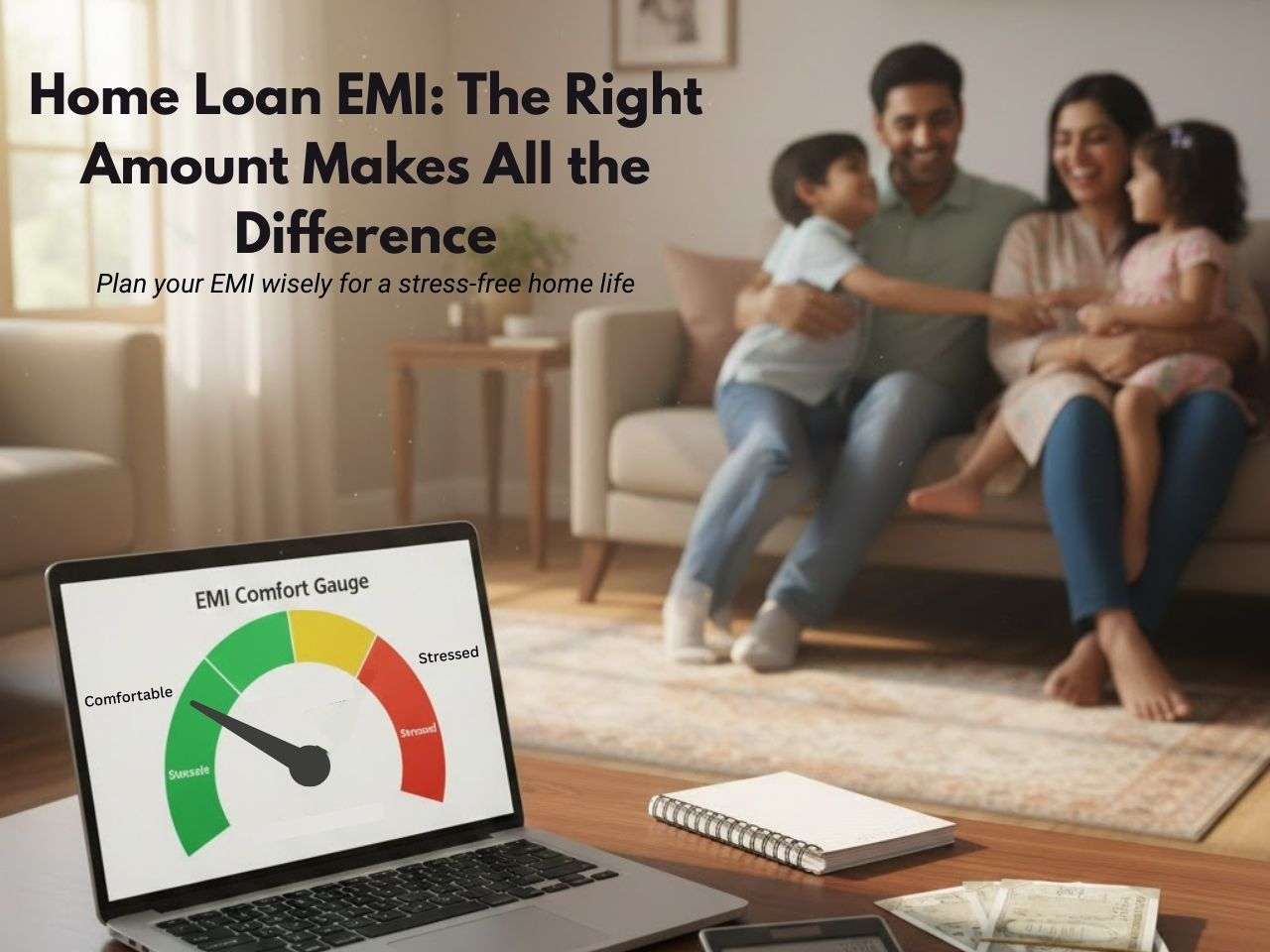
Choosing the Right
Home Loan EMI
Without Stretching Your Monthly Budget
Posted on:
Most homebuyers believe the biggest challenge in Chennai is finding the right property.
In reality, the decision that affects daily life the most comes later, when finalising the home loan and locking in the monthly EMI.
How much EMI you commit to paying every month.
That number decides whether owning a home feels comfortable or financially restrictive over the next 15–25 years. This is why EMI planning should never be rushed or based only on bank eligibility, especially for buyers evaluating long-term homeownership options in Chennai, including flats in Porur.
Why EMI Planning Is Important for
Chennai Buyers
Chennai is often seen as a relatively affordable metro, but monthly expenses here are layered and consistent.
A typical Chennai household budget usually includes:
- Transport and daily commute
- Education and school-related expenses
- Healthcare and family support
- Groceries, utilities, and maintenance
- Social and family commitments
These recurring costs do not appear in EMI calculators, yet they directly affect how manageable your loan feels.
This becomes especially relevant when buying premium apartments in Porur, where location advantages, connectivity, and lifestyle expectations influence both upfront cost and long-term EMI planning.
An EMI that ignores these realities often becomes stressful within the first year.
The Safe EMI Rule Chennai Homebuyers Should Follow
A widely accepted and practical rule is:
Your home loan EMI should stay within 35–40% of your monthly take-home income.
Example:
- Monthly take-home salary: ₹1,00,000
- Safe EMI range: ₹35,000–₹40,000
This ensures enough room for:
- Monthly living expenses
- Emergency savings
- Long-term investments
- Lifestyle flexibility
Anything beyond this may look manageable initially but usually tightens cash flow over time.
How Loan Amount Directly Impacts EMI
Many buyers focus only on the EMI without fully understanding how the loan amount influences it.
Key factors:
- Higher loan amount leads to a higher EMI
- Longer tenure lowers EMI but increases total interest paid
- Lower interest rates create significant long-term savings
Even a small reduction in loan amount through a higher down payment can ease EMI pressure substantially.
This is why reducing the loan amount, even marginally, often has a greater impact on EMI comfort than extending the loan tenure.
Common Mistakes Buyers Make While Choosing Loan Amounts
This is where many homebuyers go wrong, especially first-time and upgrade buyers in Chennai.
1. Taking the Maximum Loan Offered
Banks offer loans based on eligibility, not lifestyle comfort. Accepting the maximum amount often leads to tight monthly budgets.
2. Ignoring Future Responsibilities
Career changes, marriage, children, or family obligations are often underestimated during EMI planning.
3. Assuming Salary Will Always Increase
Income growth is never guaranteed. EMIs, however, are fixed commitments.
4. Stretching EMI to “Close Loan Faster”
Aggressive EMIs reduce flexibility and increase financial stress during emergencies.
5. Not Factoring in Other Loans
Car loans, personal loans, or credit card EMIs reduce actual affordability and should always be considered.
Comfortable EMI vs Aggressive EMI: What Do They Actually Mean?
When choosing a home loan EMI, buyers usually fall into one of two approaches: aggressive EMI or comfortable EMI.
Understanding the difference between the two is essential before deciding what works for your situation.
What Is an Aggressive EMI?
An aggressive EMI is when you choose a higher monthly payment to close the loan faster and reduce total interest paid.
This usually means:
- EMI accounts for 45–55% of monthly take-home income
- Very little buffer for savings or unexpected expenses
- Heavy dependence on stable and steadily growing income
Example:
- Monthly take-home salary: ₹1,00,000
- Aggressive EMI: ₹50,000–₹55,000
On paper, this reduces loan tenure and interest.
In reality, it leaves limited room for:
- Household expenses
- Savings and investments
- Medical or family emergencies
This approach works only when income is highly predictable and other responsibilities are minimal.
What Is a Comfortable EMI?
A comfortable EMI is planned to fit into monthly life without strain, even if it means a longer loan tenure.
This usually means:
- EMI remains within 35–40% of monthly take-home income
- Enough room for savings, lifestyle expenses, and emergencies
- Greater flexibility during career or family changes
Example:
- Monthly take-home salary: ₹1,00,000
- Comfortable EMI: ₹35,000–₹40,000
While the total interest paid over time may be slightly higher, monthly finances remain balanced and manageable.
Comfortable EMI vs Aggressive EMI: A Quick Comparison
| Aspect | Comfortable EMI | Aggressive EMI |
|---|---|---|
| EMI as % of income | 35–40% of take-home salary | 45–55% of take-home salary |
| Monthly cash flow | Balanced and predictable | Tight and restrictive |
| Savings impact | Allows regular savings | Savings often reduced or paused |
| Emergency readiness | Easier to manage unexpected expenses | High stress during emergencies |
| Loan tenure | Slightly longer | Shorter |
| Interest paid overall | Slightly higher | Lower |
| Best suited for | Most first-time & family buyers | Buyers with very stable income |
| Flexibility | High | Low |
Key takeaway: For most homebuyers in Chennai, a comfortable EMI provides better long-term stability than an aggressive EMI.
Which Option Works Better for Most Chennai Buyers?
For most homebuyers in Chennai, a comfortable EMI works better in the long run.
Why?
- Expenses such as education, healthcare, and family support tend to rise
- Career transitions and income fluctuations are common
- Life rarely stays predictable for 20–25 years
A comfortable EMI allows buyers to:
- Save consistently
- Handle emergencies without stress
- Make prepayments when income allows
In most cases, flexibility matters more than finishing the loan quickly.
A Simple Way to Decide
If paying your EMI means you must:
- Pause savings
- Rely on credit cards
- Constantly cut back on essentials
Then the EMI is aggressive.
If your EMI allows you to:
- Save every month
- Handle sudden expenses
- Live without constant financial pressure
Then it is comfortable.
Smart Ways Chennai Buyers Can Keep EMI Under Control
Instead of stretching monthly limits, consider:
- Increasing down payment where possible
- Choosing a balanced loan tenure
- Maintaining a strong credit score for better rates
- Making occasional prepayments when income allows
These steps reduce financial pressure without delaying homeownership, especially for first-time buyers in Chennai.
Frequently Asked Questions About Home Loan EMI in Chennai
1. What is a safe home loan EMI for Chennai homebuyers?
A safe home loan EMI for most buyers in Chennai is 35–40% of monthly take-home income.
This range helps manage regular expenses, savings, and unexpected costs without financial strain.
2. Can I take a higher EMI if I expect my salary to increase?
Relying only on future salary growth is risky. Income may change, but EMI commitments remain fixed.
It is safer to choose a comfortable EMI and make prepayments later if income increases.
3. Is it better to choose a longer loan tenure to reduce EMI?
A longer tenure lowers EMI but increases total interest paid.
Many Chennai buyers prefer a balanced tenure that keeps EMI comfortable while allowing flexibility for future prepayments.
4. Should I include other loans when calculating EMI affordability?
Yes. Existing obligations such as car loans, personal loans, or credit card EMIs must be included.
Ignoring them can lead to overestimating affordability and future financial stress.
Final Thoughts: Choose an EMI That Supports
Your Life
Choosing the right home loan EMI is not about taking the maximum loan a bank offers. It is about selecting an EMI that fits comfortably into your monthly life.
A well-planned EMI:
- Stays within a safe percentage of your income
- Accounts for real household and lifestyle expenses
- Leaves room for savings, emergencies, and future responsibilities
- Offers flexibility instead of financial pressure
When EMI planning is done thoughtfully, homeownership feels stable and manageable over the long term.
At NuTech, we encourage homebuyers to focus on EMI comfort over eligibility, ensuring that their home supports their financial well-being instead of becoming a monthly strain.





 Whatsapp
 Call
Call